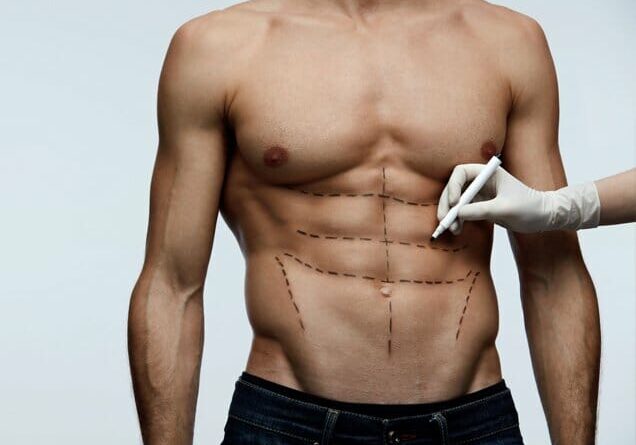
Belly Button Cosmetic Surgery

People have never heard of any cosmetic surgeon offering belly button surgery to “eliminate” the belly button. I would think that many younger adults would find this an unique show of expression since everyone seems to have the prerequisite navel piercing (boring). I wouldn’t think that this would be a hard procedure to do especially since this area is non-functional anyway. I wouldn’t think that this would be a hard procedure to do especially since this area is non-functional anyway. What would catch the lint? It wouldn’t be as easy as you might think.
I don’t know about the outie into an innie surgery but it would easier than vice versa. The outie’s are a minority anyway.  The underlying muscle forms the button as well. I don’t think anyone would be happy with a drum head of scar tissue pulled over an empty space, or even one filled with a little silicone or whatever. Sometimes I would make proud fathers a bit nervous, when they would proudly be a bit more open to UseNet than they perhaps should, and announce to the world they did, or were going to ‘clip the cord’ on their young spawn, by asking “Did you give him/her an outie or an innie”
They say that outies are NOT due to bad technique in the delivery room, but how are you going to prove that one way or another? I think it is due to muscular strength at the time, and what support might be given. Young pups often have hernia, but that’s because mom is probably wrenching the button out chomping down on the placenta.

Eyes That Are Done Look Better

Critics of eyelid surgery believe it is a cosmetic cop-out for Asian Americans who want to downplay their race, since all Caucasians and most non-Asians are born with the crease. Still others argue personal confidence is the issue, since an estimated fifty percent of Asians are also born with the eyelid fold. But Asians have been characterized by their eyes more than any other feature by Westerners (think Fu Manchu-style caricatures and slant-eye miming in the schoolyard.)


This deep-rooted, racist cultural imagery makes it somewhat impossible not to see the widespread effort to alter this trait as a reaction as well as, a statement about the effects of Westernization on Asian Americans. Those who oppose the surgery fault the pervasive influence of American culture on women’s self-esteems worldwide, especially with the expanding reach of the Internet.


Theoretically, globalization of the media over the past few decades should have fostered a diversity of images, the result of a two-way transmission of cultures — and body types. But some believe the marketing power of Hollywood, coupled with a Western tradition of colonialism, has sown cultural insecurity among Asians and other groups.


“It’s terrible that global culture has made the Western standard of beauty so predominant that Asian women feel they have to go under the knife to achieve that standard,” says Dina Gan, editor-in-chief of A magazine, the nation’s widest-circulation Asian American publication. Gan also believes the transmission of media — and beauty standards — has been unilateral. “You never hear about Caucasian women having their eyes done to look Asian,”

Cosmetic Surgery to “Caucasianize” The Eyes

Trtraditionally a procedure sought only by patients with excess eyelid skin or those hoping to lessen signs of aging, eyelid surgery or Blepharoplasty has become popular among young Asian American women and accepted as just another cosmetic choice in an array of many — like tinting your eyelashes or straightening your teeth. Approximately half of Asians are born with eyelids that are naturally smooth and uninterrupted by a crease in the skin.


Asian patients seek out blepharoplasties to create or exaggerate a crease in their eyelids commonly referred to as “double eyelids.” Some parents, like Park, assume that paying for eye surgery as just another part of raising a daughter. This acceptance of surgery within the Asian American community, while not surprising, is now being seen by more and more feminist Asian Americans as the product of an ethnocentric, racist culture.


The fact that professionals use the terms “Occidentalize” or “Caucasianize” to describe the effect of the process, without thinking twice, is in itself-very telling. Blepharoplasty is a simple procedure and is usually performed on an outpatient basis. It begins with cutting the upper eyelid into two parts and removing a sliver of skin millimeters wide as well as some of the fat underneath. Then, the surgeon reattaches the lower eyelid flap slightly beneath the upper to create a crease. It lasts less than one hour, requires a week of recovery and an antibiotic regimen, and has permanent effects.


According to the American Society of Plastic Surgeons there were 342,000 blepharoplasties performed in 2009 — a number that has more than doubled in the seven years since the ASPS began to keeping count. And now, thanks to greater availability and a cultural (some argue ingrained) preference for larger eyes, eyelid surgery has become the most popular surgery in the Asia-Pacific region. Demand is highest among Korean, Chinese, and Japanese women, though anecdotal accounts point to rising numbers of Asian men requesting the surgery.

Skin Care Products and Scams

I disagree with the idea of lumping Plastic and cosmetic surgery with alt.skincare. I have tried on several occasions to start the following newsgroups alt.plasticsurgery and alt.cosmeticsurgery. I feel that alt.skincare is a third group which would have enormous appeal. I would be happy to contribute to alt.skincare, and I would also appreciate your assistance in forming alt.cosmeticsurgery and alt.plasticsurgery.


I would also be amenable to moderate these two groups to make sure that pornographers, etc. don’t undermine the purpose of the newsgroups – to serve as an patient education and patient referral source. I represent over 150 Plastic Surgeons, Facial Plastic Surgeons, Dermatologists, and ENTs who would be willing to contribute to alt.skincare or alt.plasticsurgery and alt.cosmeticsurgery.


The reason why I’m opposed to alt.skincare also answering questions regarding plastic/cosmetic surgery is for the same reason there are many medical specialties. A Dermatologist is an excellent source of information regarding skin care, removal of tattoos, treatment of skin lesions; however, he shouldn’t be giving advice about Facelifts, Breast Augmentations, of Liposuction. In the same light, Plastic Surgeons are not the definitive source of information on skin care.


When physicians give advice outside of their specialty training, the advice must be viewed with caution because they are not fully qualified, trained, experienced or credentialed to provide it. I hope these comments are of some help to you. Please let me know if I can assist you. I would also love your cooperation in setting up alt.plasticsurgery and alt.cosmeticsurgery.

Beware Of Lasik Eye Surgery

I spent months talking to plastic surgeons on what could be done to ‘fix’ the lower eyelid. Some suggested a canthopexy to horizontally tighten the lid. This made no sense to me since my lid was too tight to begin with. Then I realized I had to find a doctor who understood the intricate anatomy of the eye.


It took several more months of intense research on the web, referrals through other doctors, publication searches, etc. before I found an excellent ophthalmologist/ophthalmic plastic-reconstructive surgeon in Beverly Hills (Norman Shorr). He told me I would need a surgery that would raise the lower lid back to its original position. To do this a lower lid graft would be placed on the inside of the lower lid to ‘give back’ the excess skin that was removed, the cheek pad lifted, fat transplanted in the hollow area, and the lid realigned and sutured in the new position.


The surgery would be done through incisions on the inside, and one incision at the outer corner of the eye. I was told the scar would be almost undetectable. The doctor performs this specific surgery several times a week, and has done it hundreds of times. So far, I am very happy I made the decision to have the surgery. I didn’t go through with it until I understood it, had several consultations, and had every single question answered. Insurance paid for a large part of it, but I had to pay for the cosmetic portion. My dry eye has resolved, as has the cosmetic aspect. My eyes are ‘normal’ looking again and my vision back to 20/20.